
By Arjun M. Bey Family Office Services | Director
October 4, 2026
Recent reporting from CNBC highlights a striking trend: ultra-high-net-worth individuals are spending upwards of $250,000 annually on disjointed, point-in-time longevity clinics and fragmented executive check-ups.
Investing in human capital is vital. The execution model many significant estates rely on, however, is fundamentally flawed. High-end clinics often treat health as a retail consumer transaction rather than as a continuous, borderless security requirement.
For families moving between primary residences, vacation estates, international business hubs, and private offices, a clinic membership is not the same as health infrastructure. A family’s health needs do not stop at one address. They move with the family.
CourMed does not provide concierge medicine. Its Private Health Office is the superior model: a dedicated health infrastructure designed to support the family, the estate, and the people responsible for keeping both operating without disruption.

The Blind Spots in Clinic Memberships
When point-in-time longevity programs are evaluated through the lens of estate governance, the blind spots are clear.
The Multi-Home Disconnect
A clinic membership is tethered to a single zip code. When a family moves between primary residences, vacation estates, and international business hubs, that clinical relationship can break down.
The family may receive an impressive assessment at one location, but the value of that assessment depends on what happens afterward. Who coordinates the next step? Who maintains continuity when the principal is traveling? Who ensures that the same health priorities are understood across multiple residences?
A clinic visit may provide attention at a moment in time. It does not automatically provide a borderless operating structure for the family.
The Vulnerability to Global Disruptions
Point-in-time clinics do little to prepare an estate for the next national or international health event. When public health systems face friction, families can be left scrambling for access, coordination, and reliable information.
Significant estates require a model that remains active before, during, and after disruption. Health security cannot be created only when a crisis is already under way. It must be organized in advance, with clear coordination across the family’s residences and trusted personnel.
The Missing Perimeter
Standard longevity models focus almost exclusively on the principal. They often ignore the surrounding household ecosystem: the estate staff and personnel who form the family’s daily operational perimeter.
That perimeter matters. Household employees, property managers, drivers, assistants, and other estate personnel influence the environment in which the family lives and works. If the household operation is disrupted, the impact can reach the principal quickly.
Protecting the family requires more than focusing on one individual. It requires a view of the estate as a connected environment.

Wealth Does Not Create Continuity by Itself
Single family offices operate lean. Their teams are often responsible for a wide range of priorities, from investment oversight and property management to travel, security, staffing, and succession planning.
Confusing significant family wealth with a blank checkbook for fragmented clinical consumerism is an inefficient use of capital. The question is not whether a family can afford another premium membership. The question is whether that membership strengthens the family’s health security across its entire estate.
The wealth belongs to the family, but the operational integrity belongs to the estate.
A family may own multiple residences, maintain a global travel schedule, and engage leading specialists. Without coordination, however, those resources can remain disconnected. Information may be scattered. Responsibilities may be unclear. Access may depend on a particular location or individual relationship.
A custom timepiece is valuable because every component works together with precision. A Formula 1 team does not protect performance by purchasing one exceptional part and ignoring the rest of the system. Why should a family approach health differently?
Absolute peace of mind comes from knowing that the system is designed to work together.
The Solution: Infrastructure Over Isolation
Through CourMed’s Private Health Office and The Resident Privilege, CourMed replaces reactive clinical consumerism with institutional-grade health security.
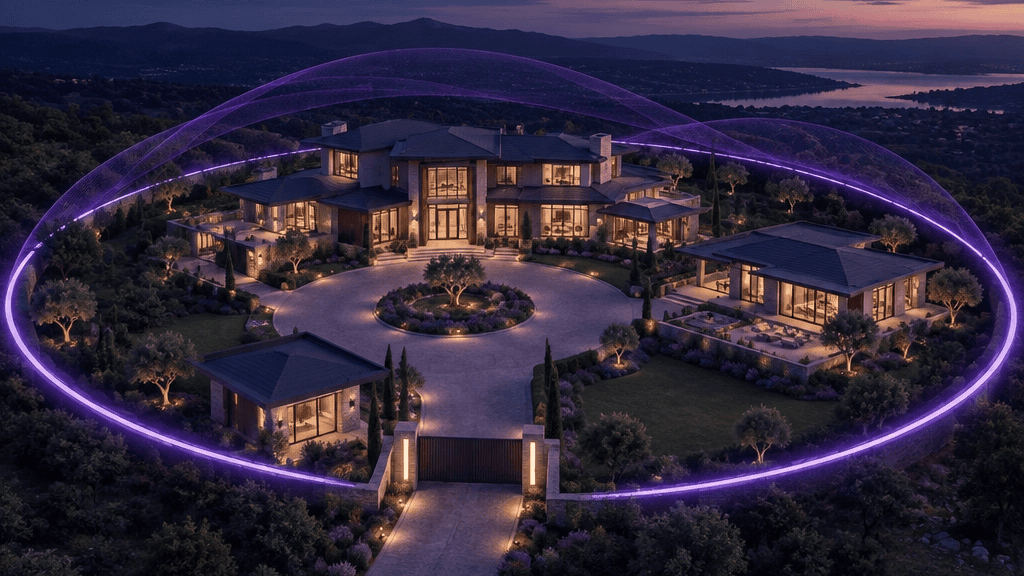
The Private Health Office is not another clinic membership. It is a coordinated model designed to place health infrastructure within the family’s existing environment and property portfolio.
The Resident Privilege provides the framework for that support across three levels:
- Principal Tier: Direct health oversight for the primary leader of the estate.
- Estate Tier: Integrated health security infrastructure for the residential environment.
- Legacy Tier: Multi-generational continuity for the family and its broader estate structure.
This model recognizes that health risk is continuous. It does not begin and end with an annual assessment or a scheduled check-up.

Whole-Family and Multi-Estate Coverage
The entire family, along with primary, secondary, and global residences, can be unified under a single, borderless infrastructure.
That continuity matters when the family moves between locations. It matters during international travel. It matters when a principal’s schedule changes without notice. It matters when a family needs support that is discreet, organized, and available without forcing every situation back through a single clinic.
The goal is simple: ensure that health support travels with the family rather than remaining attached to one address.
This is the difference between buying isolated access and creating a seamless system.
Complete Estate Household Protection
At the Legacy Tier, coverage extends to household staff and estate personnel. This ensures that the entire household operation remains secure, resilient, and free from unexpected disruptions wherever possible.
The estate is not only the principal. It is the environment that supports the principal’s daily life.
When the people responsible for that environment are included within the health security structure, the family gains a more complete view of its operational needs. The result is a stronger perimeter and fewer gaps between the family, the residences, and the people who keep them functioning.
Health Security Is an Estate Requirement
Health security is not a retail luxury expense. It is a core pillar of estate governance and risk mitigation.
A significant estate already treats financial assets, property, security, technology, and succession with planning and discipline. The health of the family leader should receive the same level of attention.
The issue is not whether longevity care has value. The issue is whether the model is connected to the realities of family life.
A fragmented clinic membership may offer access, testing, and attention. But access alone is not infrastructure. A point-in-time encounter is not continuity. A single location is not a global family system.
The Private Health Office is the superior model because it is built around the complete estate: the principal, the family, the residences, the household perimeter, and the need for discreet coordination over time.

The Question for Family Offices
Are you managing health as a scattered line item, or as an integrated pillar of your estate?
For families with significant estates, the answer should be clear. Health must be managed with the same precision used to protect the family’s other essential interests.
The $250,000 longevity trap is not simply the amount spent. It is the assumption that a premium clinic membership, by itself, can solve a continuous and borderless requirement.
True health security requires infrastructure.
#FamilyOffices #PrivateWealth #HealthSecurity #EstateGovernance #Longevity #CourMed