
Intelligence Briefing
Date: September 12, 2026
Subject: Elite Health Security and Longevity: Health Security as Essential Residential Infrastructure
Author: Derrick L. Miles, FACHE | Chairman, CourMed® | The Private Health Office
Distribution: Single-Family Offices (SFOs), Wealth Stewardship Boards, UHNW Trustees, Luxury Residential Developers & Owners
In ultra-luxury residential real estate, the definition of essential infrastructure is expanding.
For decades, premier estates and residential developments have invested heavily in physical security, private transportation, smart-home automation, redundant power, cybersecurity, and increasingly sophisticated wellness environments.
Each exists for the same fundamental reason: continuity.
They are designed to protect the property, the people within it, and the operation of the estate when circumstances change.
Yet one infrastructure layer remains largely absent: the health and continuity of the principal.
A principal’s health is often treated as a private clinical matter rather than as an estate-level risk variable. That distinction becomes increasingly difficult to defend as family enterprises, operating companies, investment structures, and complex household ecosystems become more dependent on the principal’s physical presence and decision-making capacity.
A health event does not remain inside a doctor’s office.
It can affect travel, security, household operations, family communications, business decisions, transaction timing, succession planning, and the continuity of the broader family enterprise.
The clinical event may be personal. The operational consequences are institutional.
This creates a governance gap.
Financial capital is managed through formal risk frameworks. Physical assets are protected through security architecture. Digital assets are protected through cybersecurity. Critical infrastructure is supported by redundancy and contingency planning.
Yet the human capital around which the estate and family enterprise may ultimately depend is frequently managed through a fragmented collection of clinical providers and consumer health vendors.
That is not infrastructure. It is a collection of services.
From Healthcare Access to Health Security
The next evolution of ultra-luxury residential infrastructure is therefore not another wellness amenity. It is health security.
A Private Health Office (PHO) is designed as a dedicated health infrastructure layer surrounding the principal and the estate. Its purpose is not to replace physicians, hospitals, specialists, or existing clinical relationships.
Its purpose is to organize the health ecosystem around the principal.
That distinction is fundamental:
A physician manages clinical care.
A wellness provider delivers a service.
A concierge practice provides access.
A PHO manages the infrastructure surrounding those services—coordination, biological logistics, health intelligence, continuity, privacy, response, and integration with the principal’s broader operating environment.
CourMed® does not provide concierge medicine. Its Private Health Office is a superior service model focused on health-security infrastructure, advisor allocation, continuity, discretion, and coordinated clinical support rather than concierge practice access alone.
This is the difference between adding another vendor and building another layer of the estate.
The defining characteristic of infrastructure is readiness. Capability exists before the event that requires it.
CourMed® has been developing and operationalizing this model in South Florida since 2021, with an architecture designed for portability across high-density wealth markets, including Dubai, Abu Dhabi, and other supported gateway cities.
The broader direction of capital reinforces the thesis. Markets such as the UAE are investing significantly in integrated preventive health, diagnostics, recovery, nutrition, human performance, and longevity ecosystems.
The significance extends beyond longevity.
Health is increasingly being treated as infrastructure rather than as a collection of disconnected services.
The Resident Privilege is CourMed’s framework for bringing this coordinated Private Health Office support into the residential environment with discretion and continuity.
The Four Pillars of Estate Health Security
1. Embedded Health Infrastructure

Health security should be designed into the residential environment rather than assembled after a health event occurs.
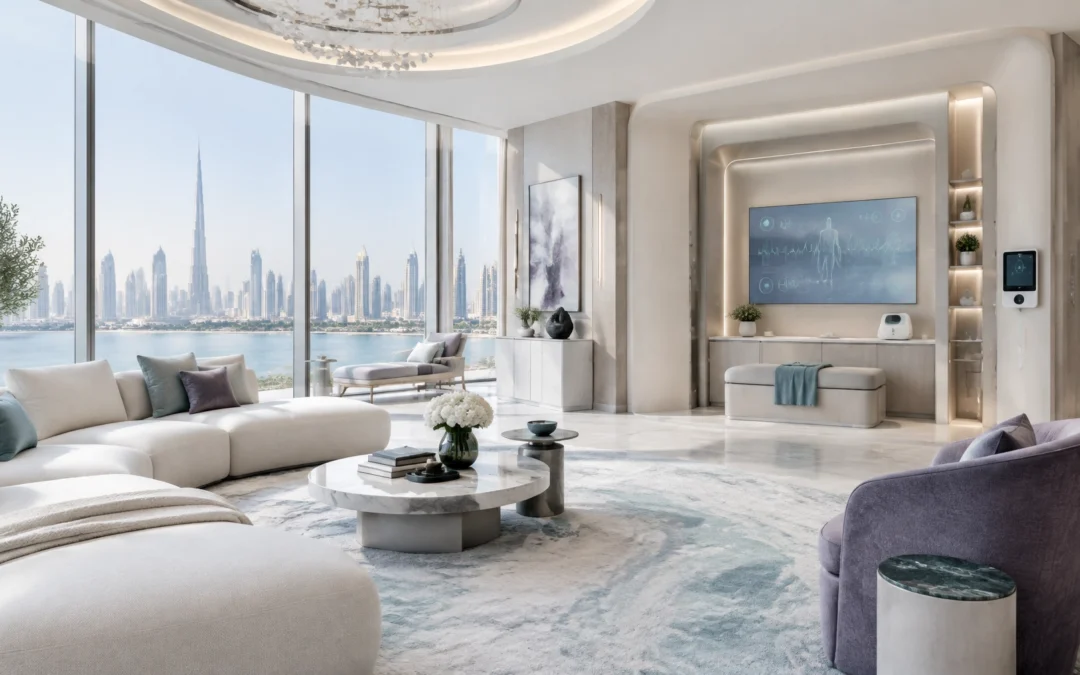
A PHO creates an invisible health infrastructure layer capable of coordinating appropriate clinical services, biological logistics, health intelligence, and response capabilities without converting the residence into a clinical facility.
The objective is not to make the home clinical. It is to make clinical capability ambient, discreet, and immediately accessible when required.
This is the same architectural principle applied to other forms of estate infrastructure: capability exists before it is needed.
2. Dedicated Health Security Advisors

Infrastructure requires governance.
A PHO therefore introduces a Dedicated Health Security Advisor (HSA) as an estate-level coordination function.
The HSA is not simply another healthcare concierge. The role is to understand the principal’s operating environment and coordinate the health infrastructure around it—clinical relationships, health priorities, biological logistics, appropriate service access, privacy protocols, and continuity requirements.
This creates a necessary separation of powers:
The treating physician owns clinical judgment.
The estate governs the residential operating environment.
The family office governs the broader interests of the family enterprise.
The HSA governs coordination of the health infrastructure connecting those environments.
The HSA governs coordination, not clinical judgment; infrastructure, not investment management.
That distinction matters.
The objective is not to maximize healthcare consumption. It is to create disciplined coordination around the principal’s health, privacy, resilience, and continuity.
3. Private Health Data & Biological Logistics

For families with significant estates, privacy is an infrastructure requirement.
Traditional healthcare can require movement through public-facing clinical environments, fragmented providers, consumer applications, laboratories, pharmacies, and multiple third-party systems.
A private health infrastructure layer creates a more controlled operating model. Appropriate services can be coordinated into the residential environment. Biological logistics can be managed with greater discretion. Health information can be organized around continuity rather than scattered across disconnected encounters.
The objective is not isolation from the healthcare system.
It is controlled integration with it.
This creates what may become one of the defining characteristics of estate health security: privacy without sacrificing clinical access.
4. Principal Continuity Across Properties

A principal does not live at a single address.
The family operating environment may include a primary residence, secondary homes, private aviation hubs, hotel residences, business destinations, and international properties.
Health infrastructure therefore cannot be location-dependent.
A mature PHO creates a Principal Continuity Protocol that allows the family to maintain a consistent health-security framework as the principal moves between residences and supported markets.
The residence changes. The health infrastructure follows.
This is particularly important as wealth becomes increasingly geographically distributed across markets such as South Florida, Texas, New York, California, the Hamptons, Aspen, and international wealth centers including Dubai and Abu Dhabi.
The PHO therefore becomes more than a residential service.
It becomes a portable family infrastructure layer.
The Estate Health Operating Layer
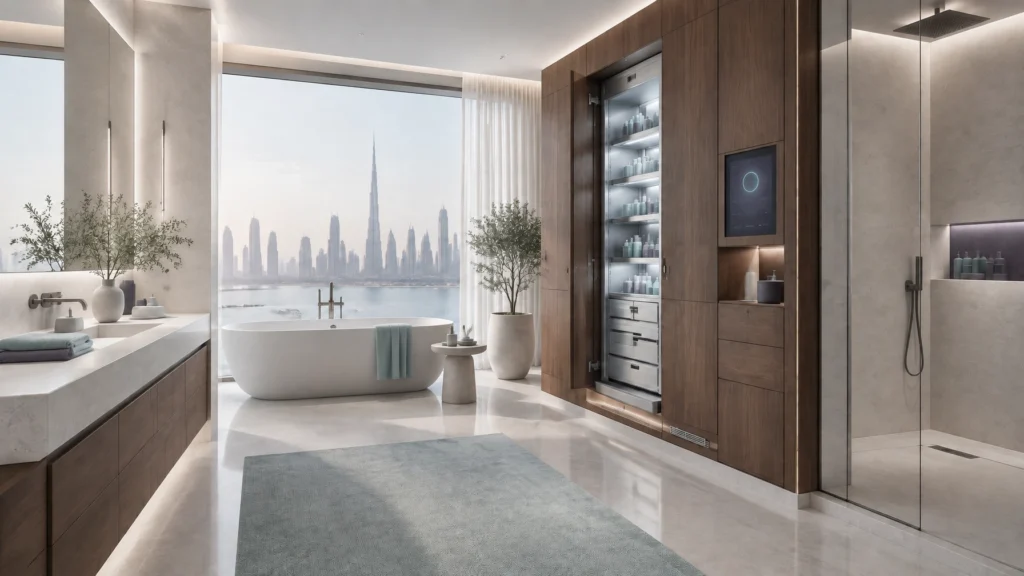
The opportunity is larger than in-home clinical support.
It is to establish an Estate Health Operating Layer—the operating architecture of the PHO—connecting four environments that have historically operated independently:
Principal → Residence → Family Office → Clinical Ecosystem
When these environments remain disconnected, health events become coordination problems.
When they are connected through an appropriate governance architecture, health becomes an integrated component of estate continuity.
That is the real purpose of a PHO.
Not more appointments.
Not more wellness.
Not another concierge physician.
Infrastructure.
For developers, this creates a new dimension of residential differentiation.
For family offices, it creates another mechanism for addressing key-person and continuity risk.
For estate stewards, it creates a structured interface between the principal’s health environment and the operational environment surrounding the residence.
And for principals, it creates something that luxury increasingly demands: capability without friction, privacy without isolation, and continuity without dependence on a single location.
The next generation of ultra-luxury real estate will therefore be evaluated not only by what surrounds the principal, but by the infrastructure protecting the principal within it.
Physical security protects the perimeter.
Cybersecurity protects the digital estate.
Redundant power protects operational continuity.
Health security protects the human infrastructure around which the estate exists.
The residence of the future will not simply be a secure place to live.
It will be an intelligently governed environment designed to preserve the privacy, resilience, and continuity of the people whose decisions, relationships, and human capital sustain the family enterprise.
That is the role of the Private Health Office.
CourMed® operates as a Private Health Office providing health-security infrastructure and advisor allocation. CourMed® does not provide concierge medicine. CourMed® is not an RIA or broker-dealer and does not offer financial investment advice.